





















































Is your current instructional materials management system falling short? If managing inventory, new materials requests, and distribution for your district’s curriculum has become a challenge, it may be time for a change.
Explore five key indicators that it’s time to look into a new instructional materials management system. By identifying these signs early, you can ensure your teachers and students have the curriculum materials they need for teaching and learning.
1) Too many spreadsheets and systems used for tracking
Sign: You are relying on multiple spreadsheets, systems, and ad hoc practices to manage curriculum resources for the district.
If your district is juggling several spreadsheets, paper forms, or disparate systems to track instructional materials, it’s time for an upgrade. These outdated methods are prone to error and can lead to misplaced resources, duplicate purchases, and miscommunication across departments.
An effective instructional materials management system centralizes information in one place, eliminating the need for scattered tracking systems. Consolidate the management of all your digital and physical curriculum materials – including serialized, generic, and consumable resources. This streamlined approach improves user experiences, reduces the training requirements, and promotes consistent practices across the district.
2) No visibility into inventory across schools
Sign: Delays getting curriculum materials to teachers and students because you don’t have a clear, real-time view of materials to determine effective allocation.
If you don’t have district-wide visibility into the inventory for instructional materials, delays in getting resources to teachers and students are inevitable. Limited tracking can lead to over-ordering or overlooking existing resources that can be reallocated elsewhere.
Look for a system that provides real-time visibility into inventory across all school sites, giving districts a clear view of what’s available and where it’s located. With up-to-date data on resource usage and availability, districts can make informed decisions—whether redistributing materials across schools or approving new purchases—for effective resource allocation.
3) Lost communications and wading through inboxes
Sign: School and district teams rely on emails or paper forms to request, review, and approve additional instructional materials or inventory transfers.
Manually handling requests for new materials outside a centralized system can result in a confusing review process and multiple emails that overwhelm inboxes.
An automated approval process for new instructional materials can be a gamechanger for districts by accelerating response times and raising transparency with a clear “paper trail.” Districts should set rules and have visibility into every step of the review process. An effective system should accept submissions, route to relevant stakeholders, and approve or deny asks for new materials and inventory transfers while providing visibility to the requester.
4) No accountability for distributed instructional materials
Sign: After distributing instructional materials, schools have no reliable way of tracking materials for loss or damages. Districts have no insights on how much loss they incur.
If you require a separate system to distribute or collect resources or if you don’t know the cost of loss or damaged materials, it may be time to explore new options.
Implementing an accountable check-out and check-in process is critical to an instructional materials management system. In addition to accommodating the distribution and collection practices for each school, ensure the system integrates with SIS and payment providers to review charges, payments, and outstanding balances in one place.
5) Compliance reporting challenges
Sign: It’s taking too long to complete reporting requests that come from the new regulations introduced by the state or school board.
Meeting compliance standards require accuracy, adaptability, and security from an instructional materials management system. Look for a solution that provides flexible reporting capabilities, customizable workflows, and a centralization of all data in a single consolidated system.
Most importantly, data security and privacy are paramount when it comes to selecting an instructional materials management system. Look for a system that complies with FERPA, COPPA, SOC2 certifications, and state regulations to protect student and staff data–as well as a commitment to the Student Privacy Pledge.
Is it time for an upgrade?
If any of these signs resonate with your district, it may be time to upgrade your instructional materials management system. With the right system, districts can ensure teachers and students have access to the resources they need–without the headaches and inefficiencies of outdated methods.
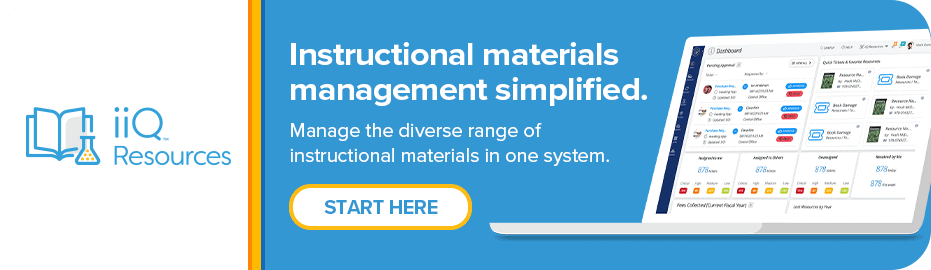
Explore how iiQ Resources can simplify instructional materials management in your district.
Schedule a demo with an Incident IQ team member for a product review.