

























































No matter the goals of your school district, all educational institutions require one thing: effective resource management to keep things running smoothly. Whether it’s managing instructional materials, financial resources, or human capital, a K-12 resource management strategy ensures that nothing slips through the cracks.
If you’ve struggled to manage all the resources across your entire school district—balancing budgets, managing staff allocations, and ensuring every school has what it needs to succeed—an effective resource management solution may be the key to maintaining efficiency.
What is Resource Management in Education?
Resource management in education involves strategically allocating financial, human, and material resources to oversee school district programs and operations. Effective resource management is one of the core responsibilities of school administrators, allowing them to align their resources with the school district’s priorities.
For example, K-12 public schools receive state and federal funding, which must be carefully distributed to support programs, instructional materials, and staffing needs. A resource management strategy allows administrators to balance available resources with the diverse needs of school districts, ensuring all students are adequately supported.
Maximizing the Impact of Resource Management
Effective resource management can be instrumental to achieving the goals of any educational institution—from K-12 schools to higher education. Below, we’ll cover outcomes that convey the importance of resource management:
Smarter Resource Allocation
Improving the allocation of existing resources allows schools to ensure that funds, materials, and staff are distributed according to educational priorities, avoiding underfunding in critical areas. Proper allocation can help direct more funding to areas like special education or technology upgrades, which might otherwise be underfunded. This strategic use of resources ensures that schools remain adaptable and capable of meeting the immediate needs and long-term educational goals of school districts.
Strategic Cost Reduction
Carefully planning and tracking how financial resources are spent allows administrators to identify areas where they can save without affecting the quality of education or overspending in certain areas. For example, the U.S. Environmental Protection Agency (EPA) found that by implementing energy efficiency measures, K-12 schools can reduce energy costs by as much as 30%. The ability to track and reduce the energy used in school facilities is just one way schools can optimize their financial resources and reduce costly operational overhead.
Enhanced Learning Outcomes
Well-managed resources directly improve learning outcomes by ensuring students and teachers have everything they need to succeed. Students can access up-to-date tools, which leads to better academic performance, enhanced time management, and a more successful learning environment. For teachers, well-managed resources reduce administrative burdens, giving educators more time to focus on lesson planning and student engagement.
Components of a Resource Management Strategy
Managing school resources involves several key components that work together to keep school operations running smoothly and to facilitate high-quality learning experiences.
Financial Management
Financial management is the backbone of any resource strategy, even in educational systems. Schools need to carefully budget for both day-to-day operations and long-term educational programs. An effective resource management strategy considers factors such as the cost of instructional materials, staff salaries, and unexpected expenses when budgeting for an entire school district.
Incident IQ’s resource management software empowers school leaders to efficiently manage school finances by centralizing instructional material usage and cost data. By integrating into financial systems for managing fees and fines, Incident IQ helps administrators allocate funds efficiently, minimize unnecessary expenditures, and optimize financial resources for educational programs.
Educational Resource Management
Educational resource management focuses on making sure the educational assets used in the classroom are available and utilized optimally. This involves ensuring that instructional materials, like textbooks and digital tools, are up-to-date and readily available to teachers and students. Resource management also involves ensuring school assets and devices are distributed equitably across classrooms and departments so that no student or teacher is left without essential tools.
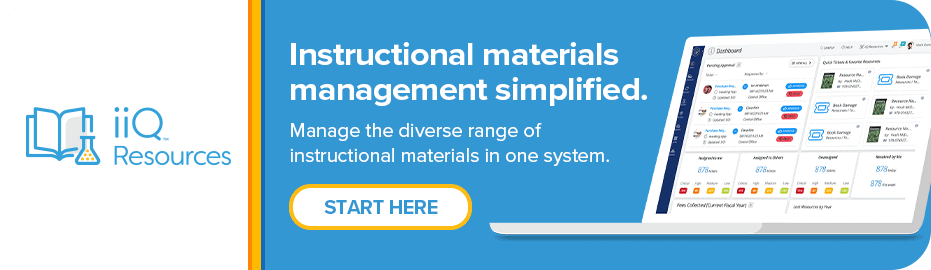
With Incident IQ, schools can easily track inventory and manage the distribution of resources across classrooms, including real-time insights into the state of textbooks, digital tools, and other educational assets. iiQ Resources also facilitates collaboration between departments, ensuring that instructional tools are shared equitably across the district, reducing delays, and enhancing resource accessibility for all students and teachers.
Human Resource Management
Human resource management is all about building and supporting the staff that drives the school’s success. This includes onboarding qualified teachers and staff and providing ongoing professional development opportunities to ensure they stay updated on the latest teaching methods and technologies. Educational leadership opportunities ensure that the school’s workforce remains motivated, capable, and aligned with the institution’s educational goals, ultimately enhancing the overall learning environment.
Incident IQ’s HR Service Delivery tool helps administrators enhance human resource management by automating key processes such as onboarding, staff requests, and professional development tracking. This school human resources software enables efficient communication between HR and staff, ensuring timely responses to personnel needs. It also offers tools to support staff development, ensuring school staff remain supported.
Best Practices for Overseeing School Resources
Now that we’ve covered how and why resource management is critical for effective school management, let’s discuss some best practices that school administrators can implement to optimize their resource management.
Assess Educational Needs
Before allocating resources, administrators should conduct a thorough analysis of current needs, identifying areas that require additional support, such as special education, technology, or professional development. This assessment enables school leaders to optimize resource distribution, preventing the underfunding of important initiatives while also equipping students and staff with the resources they need to create a successful learning environment.
Plan Budgets
Effective resource management also necessitates detailed and realistic budget planning. Schools should always engage in strategic planning to ensure that financial resources are distributed adequately across programs, staff, and school assets. A well-planned budget should not only cover day-to-day operations but also set aside funds for future needs, such as building upgrades, technology improvements, or emergency situations. Budget planning should be flexible, allowing adjustments throughout the year based on changing needs or new priorities.
Engage Stakeholders
District-wide collaboration between school administration and key stakeholders—such as parents, staff, local businesses, and community members—can enhance resource management by fostering a sense of shared responsibility for the school’s success. Stakeholders can contribute through donations, volunteer work, or partnerships, helping to expand the school’s support network. Engaging with stakeholders also builds stronger community ties and enhances transparency and efficiency in the management and allocation of school resources.
Embrace Technology
Technology ameliorates both the educational experience for learners, the success of the curriculum, and the efficiency of school operations. Embracing technology and providing students with access to school devices enriches the learning experience by equipping students with essential digital skills for future success.
By implementing school management software like Incident IQ’s IT asset management solution, school help desk solution, facilities management solution, or school event management solution, schools can streamline processes, reduce costs, and make more informed decisions about future investments.
Monitor Progress
Regular progress monitoring involves tracking how well resources are being used and assessing whether they contribute to the school’s educational objectives. Administrators should engage in ongoing decision-making based on real-time data, allowing for adjustments as needed. Regular monitoring helps optimize resource use and also ensures that the school can respond quickly to new challenges, improving overall efficiency and educational outcomes.
Incident IQ’s analytics tools provide administrators with detailed insights into how resources—such as instructional materials, IT assets, and school devices—are being utilized. By generating custom reports and visual dashboards, schools can track key performance indicators, identify inefficiencies, and monitor resource allocation against educational goals. With real-time data, school leaders can make informed decisions, quickly adjust resource distribution, and ensure that assets are used optimally to support both operational efficiency and student success.
Implementing Effective Resource Management
Implementing a successful resource management strategy requires commitment from both leadership and staff. By aligning resources with the school’s mission, strategically planning budgets, and continuously monitoring progress, school districts can allocate and use resources optimally, enhancing the student learning experience and improving staff satisfaction.
iiQ Resources, resource management software designed specifically for school districts, provides school administrators with the tools they need to facilitate student learning experiences and meet the school district’s educational objectives without wasting valuable resources. Discover how Incident IQ’s resource management software can support your district, or explore our resource hub for solutions to common challenges faced by school system administrators.