





















































Conducting a comprehensive audit of all your IT assets can be challenging, especially without a step-by-step plan of audit procedures your IT team can follow. However, by following the suggestions below, you’ll boost your inventory management practices, ensure assets are in proper working condition, and maximize your asset lifecycle – potentially saving your district thousands.
Let’s get started.
What is an IT Asset Audit?
An IT asset audit is a comprehensive evaluation of hardware and equipment within a school or district. It identifies and catalogs the purchase date, cost, and location (if available) of all student, faculty, and administrator technology equipment throughout a school or district.
This process is a key component in IT asset management, involving outlining audit goals, implementing a strategy, assigning individual responsibilities within their team, collecting asset data, properly assessing the condition of district assets, connecting those assets to their assigned users, and reviewing outputs to ensure no details were missed. A school technology audit checklist can help streamline this process, ensuring that all necessary steps are covered and no critical details are overlooked.
With asset inventories in potentially reaching tens of thousands of items, the auditing process can easily overwhelm district leaders. Though the scale of the work might seem intimidating, we’ve got you covered with a detailed, step-by-step guide to help you get started.
Types of IT Asset Audits for Schools
Schools conduct either internal or external audits depending on their specific needs. We cover both in more detail below, but regardless of the type used, IT asset audits check for security, performance, compliance, profitability, and configuration, and create asset records that can be referenced and tracked over time.
Internal Audits
Internal audits are typically conducted by an organization’s own IT department. They focus on assessing and verifying the organization’s assets to minimize discrepancies. When conducted properly, these audits help ensure compliance with internal policies, identify security vulnerabilities, and optimize asset utilization.
Since internal IT asset audits can be massive in scope and many IT teams are not experienced at conducting them, it’s important to have help with this process. Software providers like Incident IQ can help streamline the asset management process, reducing the burden on the IT team and ensuring your internal audit is successful.
External Audits
External audits are objective, third-party assessments of an organization’s IT assets. They’re conducted less frequently than internal audits, but because an external auditor can offer a high level of impartiality and credibility to stakeholders, they are often required for regulatory compliance or certification purposes.
How to Run an IT Asset Management Audit
Below is an unbiased, objective look at each stage of an IT Asset Management (ITAM) audit. Follow this step-by-step guide and consider these steps carefully when defining the asset audit process in your own district.
1. Outline Your Scope and Objectives
The most common goals of any ITAM audit include identifying faulty assets, ensuring security and regulatory compliance, and cataloging discrepancies in a school or district’s IT infrastructure. While it’s essential to clearly outline these outcomes in the scope of your audit, you should also seek input from other key stakeholders within your district.
These individuals may include your district’s director of technology, a technology advisory board, or the IT manager at a specific school. With their input, you can outline the exact information you’ll need from an upcoming audit.
Other auditing goals may include:
- Identifying assets that have upcoming expirations on their warranties so you can keep them properly insured
- Locating where district assets are currently being deployed in case you need to reassign them
- Determining the age of select assets to plan for upcoming device retirements and refreshes
When outlining the goals of your IT asset management audit, it’s equally important to determine the scope. If you run regular audits throughout the year, the scope will be much smaller and can be summarized in a brief report. However, the practicality of staggered audits is contingent on the size of your team, their capacity, and the goals you need to meet.
2. Assemble Your ITAM Team
With clear goals and a solid strategy, assembling your IT asset management team should be easy. All it takes is assigning the right jobs to the right people. You should plan to have individual team members assigned to different asset management functions, such as importing assets, handling and tracking software licenses, and running reports.
Select team members from different populations within your school district, including:
- IT department: The rise of 1:1 technology in schools necessitates asset tagging to log all mobile devices via a barcode tied to your school’s asset management software.
- Teachers: Use barcode-scanning technology with a connected webcam or scanner for verifying student devices. Incident IQ’s “My Classes” feature simplifies updating them in your district’s asset management software.
- Students: Ensure assigned laptops are available during audits by sending a school-wide announcement to faculty, teachers, and parents.
- Facility managers: Audit non-IT assets using school facility management software to save time on work orders and asset organization.
Determining these responsibilities ahead of time gives your team the ability to perform their tasks with a clearer understanding of their individual tasks and general insight into the overall auditing process.
3. Select an Inventory Method and Implementation Strategy
Once your goals are clearly defined, you can dive into the actionable elements of your plan: implementing the strategy. If your goals explain the “why” behind an audit, your strategy should define the “who, when, where, and how.”
Let’s break the first three down here:
- Who: Who on your team is responsible for carrying out individual tasks? This should be determined by a team lead or a K-12 IT manager. Assign responsibilities appropriately to avoid duplicate work, workflow bottlenecks, or confusion.
- When: When is your audit taking place? Is there a certain time of year that works best for your IT team? How will other school events potentially affect or influence your auditing plan?
- Where: Will you be verifying assets physically? If so, where will teachers, students, and staff be dropping off their devices?
Next, move on to the “how” of your audit by selecting an inventory method that is not only highly accurate and efficient but is also realistic for your district’s size and staff. Here are some methods you can use:
- Traditional physical inventory count: A standard audit involves comparing your district’s current asset inventory with the inventory found in your audit. Any discrepancies, including missing or stolen assets, should be flagged for further inspection.
- Cycle counting: Some organizations audit their district inventory over time using the “cycle counting” method, which involves counting a small amount of inventory each day rather than all at one time. Since cycle counting may require thorough pre-planning, it can be limited to a select asset group, such as student laptops.
- ABC inventory analysis: K-12 IT teams may use the ABC analysis method to separate assets into groups, such as mobile assets (student laptops), fixed assets (classroom projectors), and facility assets (HVAC systems and water heaters). Separating your district’s assets into distinct categories gives your IT team greater visibility and helps divide the workload.
- Cutoff analysis: A cutoff analysis requires your IT department and all other teams involved in the inventory auditing process to halt their day-to-day operations, so it’s best performed during the summer or winter break. This ensures that there are no mistakes or uncontrollable variables during the audit.
Ultimately, each of these strategic elements will help answer all the crucial logistical questions that are key to guaranteeing your audit runs smoothly.
4. Perform an Asset Discovery
Proper asset discovery is the key to any successful audit. Unless you know exactly what assets are available in your district, accurately reporting on them is impossible.
For starters, your school IT department will need access to an asset management system that can store and track detailed device data. Even though some districts still use spreadsheets as supplementary tools for IT asset management audits, spreadsheets are largely ineffective when it comes to managing large school inventories.
This is because even if your team is able to import all the asset data necessary to conduct an audit, trying to navigate through a spreadsheet to collect and report on the information you need takes a lot of time and can result in inaccurate reporting.
Once your team is equipped with the right tools, you need to outline how data is going to be imported. If you’re already using school asset management software, you can easily import detailed asset data through an MDM integration and run an audit via automatic login verification. Alternatively, you can audit devices in the classroom by equipping teachers with barcode scanners.
5. Assign All Assets A Condition “Score”
A condition “score” is a way for members of your IT team to quickly assess an asset’s physical condition. For example, on a 1-10 scale, a hardware asset that’s broken with no hope for repair would be labeled as “zero” while an asset that is in working condition, but has clear, visible damage and a long service history might be labeled anywhere from 4-6.
To determine the condition score of an asset, use the following variables:
- Age of the asset
- Visible damage
- Number of assigned owners
- Service history
By giving select assets a condition score, K-12 IT teams can forecast future investments in student technology and upcoming maintenance.
For a total view of the condition of your district’s asset fleet, you can calculate the mean or average of these scores and access a qualitative score that represents the state of the assets in your district. This is a nice-to-have when budget time rolls around, so you can make a case for future investments in student technology and new assets or additional team hires.
6. Connect Assets to Users
Knowing who is responsible for an asset promotes good device stewardship and keeps students accountable for protecting and keeping track of their assigned devices. Using school asset management software, IT teams can integrate with their district’s SIS to securely import user, course, and roster data. This allows for the quick identification of device assignments and allows IT teams to maintain accurate records of device ownership.
7. Visualize Your Asset Data With Custom Dashboards
Here’s another problem with spreadsheets: they make it difficult to visualize your data or workflows.
A dashboard view of your audit reports and workflows makes life much easier when trying to understand the impact your IT team is having on your school district. It’s also a great tool when reporting your findings to district leadership.
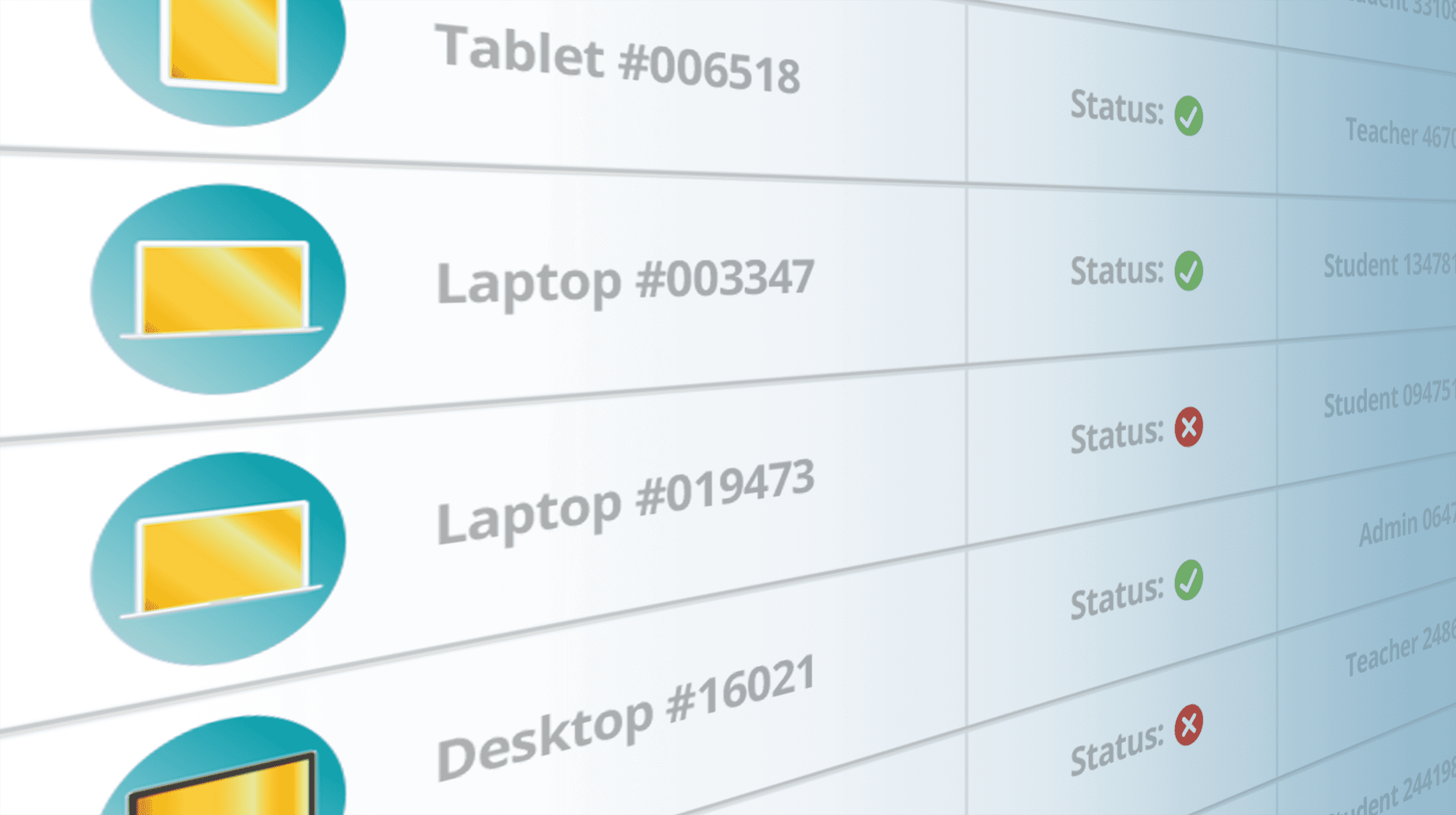
Using an asset management system, IT teams can create custom dashboards where they can visualize their audit data and organize it with custom views, such as:
- Newly registered assets in the last 30 days
- Assets assigned to a specific grade level
- Assets in need of repair
- Students no longer enrolled in the district that still have an assigned device
Custom dashboards are incredibly helpful when conducting an IT asset management audit because they allow your team to quickly sort through piles of important data.
8. Link Asset Management with Help Desk Ticketing
Once your audit is complete, your school IT team can expect a flurry of incoming help tickets and service requests. Now that you’ve uncovered everything that’s wrong with your district’s assets, it’s time to fix them.
By integrating your school asset management software with your district’s help desk, your IT team can spend less time juggling between platforms by accessing detailed asset data right from a help ticket. This data can include make, model, ownership data, service history, and more—everything IT agents need to get immediate insight when resolving help requests.
9. Calculate the ROI of Your School ITAM Audit
This is your K-12 IT department’s time to shine. By calculating the ROI of your IT asset management audit, you can show district leadership and other key stakeholders the financial impact your team is having on the school technology budget.
Calculating ROI for your audit is also essential for making sure your team isn’t exceeding the cost of internal labor, contract labor, spare parts, additional hires, and subscription software costs.
To effectively calculate the financial impact of your IT asset management audit, you’ll need to measure the difference between the expenditures listed above and the lowered maintenance and IT support costs that result from predicting expenses ahead of time. These financial records will then help you make more informed decisions when you need to purchase new peripherals, laptops, and devices for your school.
Why is IT Asset Tracking and Auditing Important?
IT asset audits help schools get a clearer picture of their technological asset inventory, which includes software licenses. They also aid in understanding how IT assets are linked, which is vital for lifecycle management and making informed decisions about replacements. Regular audits help ensure regulatory compliance and confirm adequate IT infrastructure in classrooms. The ability to track assets is essential for efficient planning, budgeting for new equipment, and scheduling maintenance.
Let’s take a closer look.
Regulatory Compliance
Most school asset audits are internal, but it’s still crucial for K-12 IT teams and district leadership to ensure that their audit meets compliance standards. These regulatory requirements are in place so that your school district won’t face any fines or penalties.
Depreciation Management
School assets depreciate in value over the years as they get older and move between different assigned users. Auditing allows IT teams to keep track of aging assets and calculate depreciation over time. Depreciation management also informs IT teams of each asset’s potential resale value, helps them anticipate upcoming maintenance tasks, and streamlines asset allocation.
Getting Rid of Ghost Assets
“Ghost assets” are district assets that are not available or don’t exist but are still being registered in your IT team’s asset management system. A proper audit and discovery of these devices enable your district’s IT team to get rid of missing devices that slow down their workflows and skew their auditing data. It also makes it possible to update your license management system and deactivate licenses for defunct or lost assets.
Pinpointing Asset Locations
School districts face the same struggles as large enterprises when it comes to asset tracking across multiple locations. Running an audit helps IT teams determine the exact location of their district’s assets and move them accordingly between schools, buildings, or even classrooms to better meet the needs of teachers, students, and staff.
Maintenance and Upgrades
Audits provide insights into the condition and performance of IT assets and should include information on when the equipment was last tested or repaired, as well as any upcoming maintenance needs. Leveraging your IT asset inventory to proactively strategize maintenance and upgrades can help extend the lifespan of your physical assets and ensure optimal performance.
What Tools Should I Use for K-12 Inventory Audits?
Even if your district uses a detailed IT asset management checklist, assigns roles and responsibilities, and has a flawless itinerary planned, the asset management tools you use could easily make or break the success of your inventory audit.
Traditionally, large data sets are managed within auditing checklist templates using spreadsheets like Excel or Google Sheets. However, spreadsheets often fall short when managing large school inventories due to:
- The need for manual data entry
- Poor data integrity
- Limited user accessibility across departments
- An inability to scale
In response, more school districts are ditching spreadsheets and implementing asset management software in their IT tech stack.
At Incident IQ, we responded to this problem by creating asset management software built with K-12 schools in mind. As a part of our school management software platform, our asset software features tools that streamline both physical and touch-free audits and allow K-12 IT teams to keep an eye on device counts year-round.
To learn more about our asset auditing tools built for K-12, schedule a demo with Incident IQ today to streamline your school’s IT asset management and save thousands in tech costs.