






























































The best school maintenance teams are always looking for ways to improve. Key performance indicators (KPIs) can help you give them clear, direct maintenance management targets. KPIs enable a data-backed approach to tracking and evaluating maintenance performance and asset management, unlocking insights that can drive continuous improvement and highlight top performers.
However, relying on a spreadsheet to track performance against KPIs can become a job in and of itself. Many schools simplify this task by using computerized maintenance management software (CMMS).
In this guide, we’ll cover everything you need to know about maintenance KPIs, including the essential performance indicators for schools and how to choose the right CMMS software for your school or district.
How Maintenance KPIs Inform Maintenance Management
A maintenance KPI is a quantifiable metric used to evaluate the efficiency and effectiveness of your school’s maintenance activities. These KPIs provide insights into asset reliability, maintenance compliance, and other essential aspects of maintenance management that you can use to objectively assess the overall performance of individuals within your maintenance department or the maintenance team as a whole.
Incorporating maintenance KPIs into your goal-setting process offers many benefits. KPIs support strategic planning by allowing organizations to assess performance against industry benchmarks and set realistic targets for improvement. KPIs can also help improve organizational processes. For example, developing and regularly tracking KPIs around preventive maintenance work can improve asset reliability and lifespan, helping avoid costly emergency repairs.
Maintenance KPIs enable data-driven operational decision-making for school leaders, ensuring facilities management efforts align with the school’s specific objectives. However, for accurate, meaningful insights on progress toward facility management goals, generic KPIs won’t suffice. To maximize outcomes, you must tailor these indicators to your school or district’s unique maintenance goals.
Maintenance KPIs vs. Maintenance Metrics
Understanding the distinction between maintenance KPIs and metrics is crucial for effective facility management. While both are essential for tracking performance, they serve different purposes.
Maintenance KPIs are high-level indicators such as asset reliability and maintenance compliance that tie organizational progress to performance. KPIs help in decision-making and long-term strategic planning. Maintenance metrics, on the other hand, are more granular. A metric focuses on specific aspects of maintenance activities, such as downtime or the number of completed maintenance tasks, to connect performance to actions and identify areas for improvement.
Think of maintenance KPIs and maintenance metrics as different parts of a car. Just as your GPS or map app guides your overall journey, maintenance KPIs guide the overarching goals and strategic direction of your maintenance efforts. Meanwhile, maintenance performance metrics are like the dashboard indicators on your car, providing real-time, detailed information about your fuel level, tire pressure, and speed. So, while KPIs helps you visualize your big-picture maintenance goals, your metrics provide you actionable insights needed to ensure a smooth and efficient journey.
This table highlights the difference between types of maintenance KPIs and maintenance metrics:
| Aspect | Maintenance KPIs | Maintenance Metrics |
| Definition | Strategic indicators measuring overall progress towards maintenance goals | Tactical measurements of specific maintenance actions or processes |
| Purpose | Provide a broad view of performance and goal achievement | Offer detailed insights into specific maintenance activities |
| Examples | Overall equipment effectiveness (OEE), Asset reliability, maintenance compliance | Number of work orders completed, downtime, parts inventory levels |
| Use Cases | Tracking long-term maintenance goals, assessing overall maintenance strategy effectiveness | Monitoring daily maintenance tasks, optimizing specific processes |
| Impact on Decision- Making | Informs strategic decisions by highlighting areas needing improvement to meet organizational goals | Aids in operational decisions by pinpointing specific issues and inefficiencies |
Aids in operational decisions by pinpointing specific issues and inefficiencies
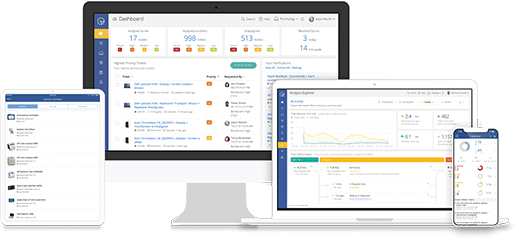
Maintenance KPIs and maintenance metrics both offer value in their own way. And with the analytical dashboards provided by CMMS tools like Incident IQ, you get real-time visibility into maintenance KPIs.
8 Maintenance KPIs to Measure Performance
While it’s essential to tie maintenance KPIs back to your own organizational goals, it can be challenging to figure out where to start. We’ve gathered seven of the top maintenance KPIs school facility teams can use to start evaluating performance.
1. Equipment Downtime
Unplanned downtimes directly affect the bottom line in asset-intensive industries. In K-12 schools, poor asset management and equipment downtime not only impact the maintenance budget but can also cause interruptions that significantly degrade student and staff productivity, resulting in lost learning time.
Tracking downtime is essential to gauge maintenance effectiveness and identify areas for improvement. Implementing PM, or preventive maintenance schedules, as recommended by manufacturers, can greatly reduce the frequency of breakdowns and extend the lifecycles of critical equipment. By adhering to a proactive maintenance approach, schools can minimize equipment downtime, optimize total maintenance hours, and ensure planned maintenance activities occur within the specified timeframe. This proactive strategy helps maintain a conducive learning environment, ensuring that students and staff experience fewer disruptions due to unexpected maintenance time.
2. Mean Time Between Failures (MTBF)
Mean Time Between Failures (MTBF) is a critical machine reliability metric measuring the average time elapsed between the breakdowns of a system. The formula for MTBF calculation is straightforward:
MTBF = Total Operating Time / Number of Failures
For example, if a piece of equipment operates for 1,000 hours and experiences 5 failures during that period, the MTBF would be 200 hours. Understanding MTBF is essential for effective maintenance planning, as it helps predict the reliability and performance of equipment over time.
MTBF aids in maintenance planning by identifying patterns in equipment failures, allowing maintenance teams to implement preventive maintenance strategies effectively. Common mistakes in calculating MTBF include not accounting for all failures, mixing equipment data, ignoring environmental factors, and using incorrect or inconsistent operating time data. Calculations with any of these issues could lead to inaccurate reliability predictions.
Predictive maintenance solutions leverage MTBF data to anticipate and schedule maintenance activities before failures occur, significantly reducing unplanned maintenance and decreasing your maintenance backlog. This proactive approach not only enhances continuous improvement efforts but also results in substantial cost savings by minimizing emergency repairs and maximizing equipment uptime.
3. Mean Time to Repair (MTTR)
Mean Time to Repair (MTTR) measures the average time required to repair a broken-down asset and restore its full functionality. You can calculate MTTR by dividing the total repair time by the number of repairs over a specific period:
MTTR = Total Repair Time / Number of Repairs
For example, if the total repair time for five breakdowns is 20 hours, the MTTR would be 4 hours.
MTTR is a significant maintenance metric because it indicates the efficiency of common maintenance processes. A low MTTR means that repairs are conducted swiftly, minimizing downtime and reducing profit loss. It can also indicate a maintenance team that’s adept at root cause analysis to identify and solve bigger problems. Keeping MTTR low is essential for maintaining high levels of operational efficiency and overall equipment effectiveness (OEE).
Similar to MTBF, maintenance managers make some common mistakes when calculating MTTR. It’s important to have complete repair data, as failing to record all repair times or omitting minor repairs can lead to inaccurate MTTR calculations. Using inconsistent methods to measure repair time can also skew MTTR values. Failing to address recurring issues or replace a breakdown-prone asset can inflate MTTR as similar repairs are repeatedly counted.
By focusing on accurate MTTR calculation and implementing predictive and preventive maintenance strategies, organizations can achieve better maintenance performance and ensure continuous improvement in maintenance processes.
4. Scheduled Maintenance Critical Percent (SMCP)
SMCP is a KPI maintenance teams use to organize and prioritize maintenance tasks. It measures the percentage of critical maintenance tasks completed on schedule, providing visibility into how well teams adhere to essential maintenance plans. To calculate SMCP, you can use this formula:
SMCP = (Number of Completed Critical Tasks / Total Number of Critical Tasks) x 100
SMCP calculates task lateness by comparing the scheduled completion dates of maintenance tasks against their actual completion dates. For example, if a maintenance plan includes 10 critical tasks for the month and 8 are completed on time, the SMCP would be (8/10) x 100 = 80%. SMCP is a critical KPI in real-world maintenance scenarios because it helps ensure that essential maintenance activities are not overlooked. A high SMCP indicates good schedule compliance, while a low SMCP can signal issues such as inadequate maintenance life cycle planning or poor resource allocation for maintenance operations.
5. Maintenance Backlog
Maintenance backlogs significantly impact the recruitment and workload of maintenance technicians. Tracking baseline maintenance time and cost data is crucial to accurately assess staffing needs. For example, a backlog of outstanding work orders could indicate a pressing need for additional technicians, while minimal or nonexistent backlogs could indicate overstaffing.
Your maintenance backlog can also indicate whether you’re over-reliant on reactive maintenance to resolve issues. Reactive maintenance is any repair work that takes place in response to equipment failures. Of course, even the most prepared maintenance teams run into emergencies, but nonstop reactive maintenance leads to technician burnout, increased maintenance costs, prolonged downtime, and reduced asset performance. Persistent backlogs also hinder the efficiency of maintenance processes, affecting overall productivity.
One way to spot a reactive maintenance issue is by measuring overtime. Excessive overtime can indicate that maintenance teams are overwhelmed, signaling a need for a more proactive approach to maintenance.
6. Overall Equipment Effectiveness
We touched briefly on overall equipment effectiveness (OEE) earlier. However, this essential maintenance KPI warrants its own section because of the unique productivity insights it offers through the lens of asset availability, performance, and quality.
Here’s how to calculate OEE:
OEE = (Availability × Performance × Quality) × 100%
Say you have an asset operating with the following metrics:
- Availability: 90%
- Performance: 95%
- Quality: 98%
Your OEE calculation would look like this:
OEE = (0.90 × 0.95 × 0.98) × 100% = 83.79%
In this situation, your asset would be operating at 83.79% of its optimal efficiency.
Let’s take a closer look at the different factors that go into an OEE calculation.
- Availability is a measure of an asset’s uptime. You can calculate it with this formula:
Availability = (Operating Time / Planned Production Time) x 100
So if a machine is scheduled to run for eight hours but is down for an hour due to maintenance, its availability would be (7 / 8) x 100 = 87.5%. - Performance assesses how much the asset produces compared to its maximum potential output. Calculate an asset’s performance using this formula:
Performance = (Actual Production Rate / Ideal Production Rate) x 100
If the ideal production rate is 100 units per hour but the machine only produces 80 units per hour, its performance would be (80/100) x 100 = 80%. - Quality measures the proportion of high-quality items produced by the asset. It’s calculated using this formula:
Good Units / Total Units Produced x 100
So, if a machine produces 100 total units but six are defective, its quality is (94/100) x 100 = 94%.
Using the percentages from these examples, you would calculate OEE by multiplying 87.5% x 80% x 94% to reach an OEE of 65.7%.
High OEE values indicate that an asset is performing well, while lower values highlight inefficiencies that need to be addressed. By calculating OEE, organizations can identify areas for improvement and implement strategies to enhance asset productivity by reducing downtime, optimizing performance, and ensuring high-quality output.
7. Asset Reliability
Asset reliability is a KPI that’s used to determine if a piece of equipment is operating satisfactorily at any given time. Maintenance teams track this KPI to reduce downtime and optimize performance, ensuring that machinery is functional and productive whenever needed. This metric is particularly relevant for repairable and continuously operating equipment, as it directly measures operational efficiency and overall productivity.
Various stakeholders are invested in improving asset availability. Design engineers focus on creating inherently reliable and easy-to-maintain equipment. Operators are concerned with the equipment’s day-to-day functionality and performance, while maintenance personnel are responsible for minimizing downtime through effective repairs and preventive maintenance strategies.
A RAM (reliability, availability, and maintainability) analysis integrates its three namesake aspects to provide a comprehensive understanding of an asset’s performance:
- Reliability refers to the probability that equipment will perform without failure over a specific time period.
- Availability refers to the proportion of time that equipment is operational and available for use.
- Maintainability tells you the ease and speed with which technicians can restore equipment to operational status after a failure.
Together, these factors help maintenance teams formulate strategies to enhance asset reliability. For example, one asset may be more reliable, experiencing fewer failures, while another is easily maintainable. Both assets require a unique maintenance program.
8. Planned Maintenance Percentage (PMP)
Planned Maintenance Percentage (PMP) is a crucial KPI that measures the effectiveness of your preventive maintenance strategy. It calculates the percentage of maintenance activities that are planned versus those that are reactive. A higher PMP indicates a more proactive approach to maintenance, which can lead to reduced downtime, lower maintenance costs, and extended equipment life. To calculate PMP, use this formula:
PMP = (Planned Maintenance Time / Total Maintenance Time) x 100
For example, if your maintenance team spends 80 hours on planned maintenance and 20 hours on reactive maintenance in a week, your PMP would be (80 / 100) x 100 = 80%. Tracking PMP helps schools identify areas where they can improve their maintenance planning and reduce unexpected equipment failures, ultimately contributing to a more efficient and cost-effective maintenance program.
Choosing the Right Tool for Maintenance Management
Selecting the right tool for maintenance management is essential to ensuring efficient operations and accurate tracking of maintenance key performance indicators (KPIs). When evaluating a computerized maintenance management system (CMMS), prioritize features like comprehensive asset tracking and advanced reporting and analytics capabilities. A world-class CMMS like Incident IQ will offer these features out-of-the-box, enabling effective tracking of KPIs like the ones above.
Incident IQ also allows you to conveniently manage assets remotely, generate in-depth reports using the platform’s advanced asset analytics tools, and easily share these reports with all stakeholders involved – all through an intuitive user interface designed to enhance efficiency and reduce costs.
If you’re ready to start tracking maintenance KPIs to improve the efficiency and effectiveness of your maintenance operations, schedule a demo to see what Incident IQ can do for your school district.