

































































THE CHALLENGE
When Complexity Costs More than Money
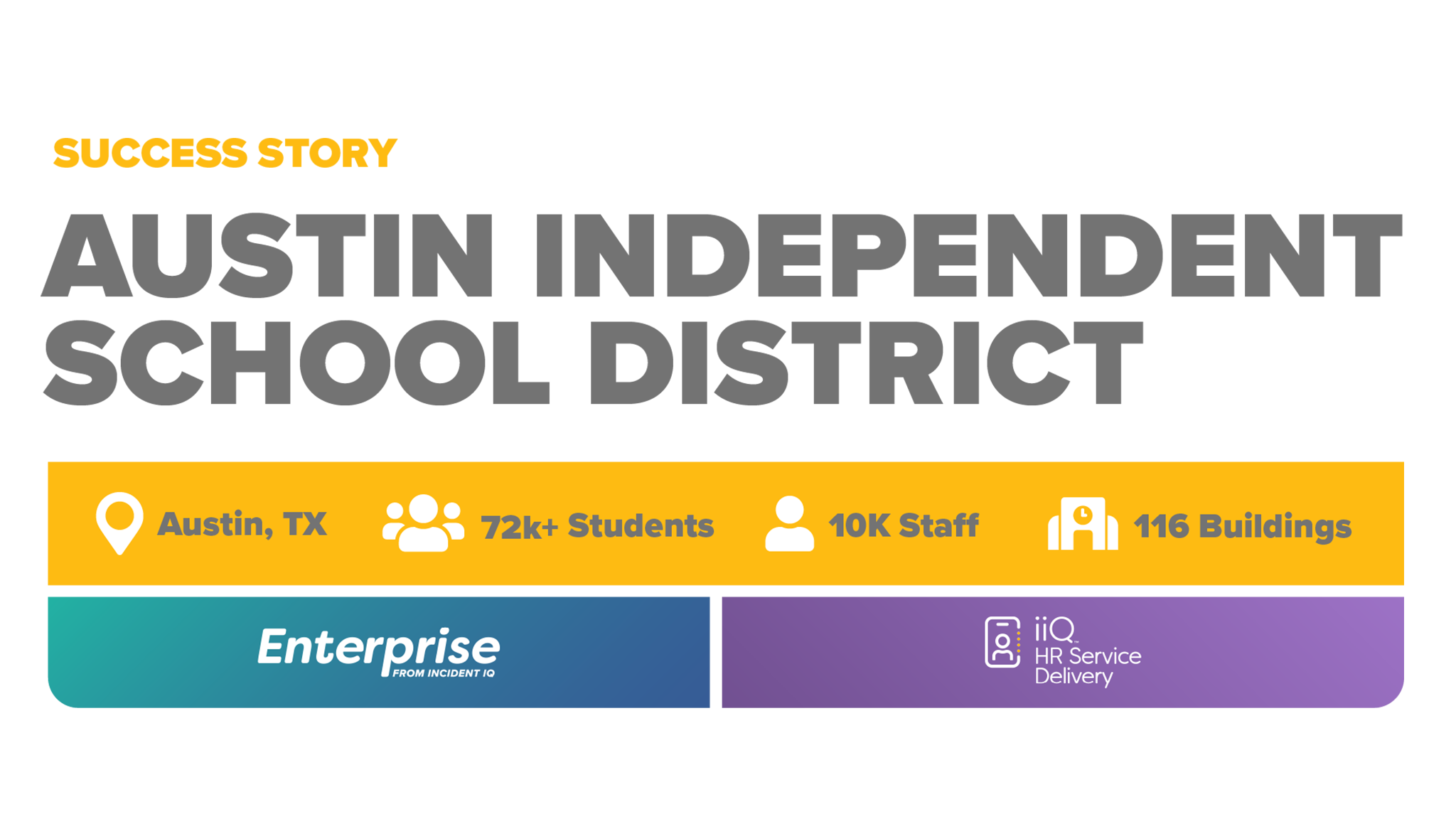
Austin Independent School District (Austin ISD) supports more than 72,000 students and 10,000 full-time employees across a diverse network of campuses. As the district’s technology landscape expanded, their teams relied on a mix of disconnected systems, including a retrofitted corporate IT solution, a vendor-built custom tool, and various point solutions. While each system served a purpose, together they created chaos and confusion for end users.
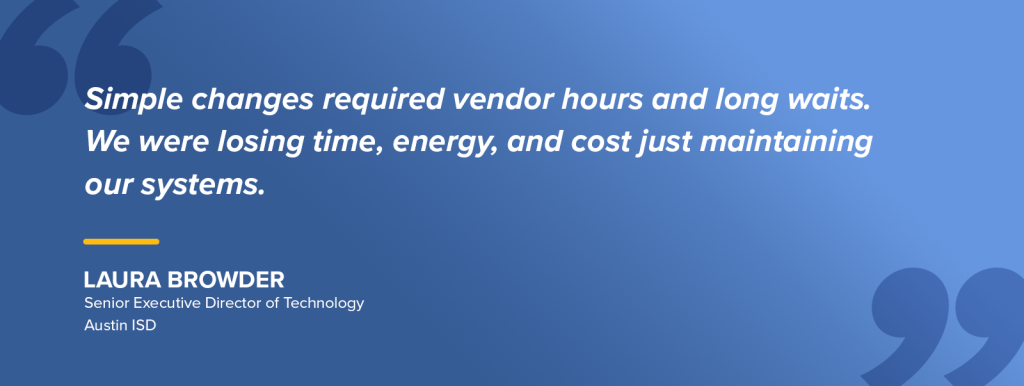
“Simple changes required vendor hours and long waits,” explained Laura Browder, Senior Executive Director of Technology. “We were losing time, energy, and cost just maintaining our systems.”
These delays had district-wide impact – agents couldn’t access reliable, real-time data, manual exports of reports delayed critical insights teams needed for staffing and training decisions, and end users faced a confusing matrix of various portals and emails to navigate cross-departmental questions that led to frustration and inconsistent service experiences.
For teachers managing a full classroom of students with just five minutes between classes, this complexity was untenable. “No one was thinking, ‘How can I make a second-grade teacher’s life more difficult?'” Browder noted. “But we had created unintentional silos.”
Security concerns added another layer of urgency. Sensitive workflows, including Ombuds mediation, Board of Trustees inquiries, and Texas-mandated reporting required strict access controls that legacy tools couldn’t provide.
THE STRATEGY
Anchoring the Change in the “Why”
Austin ISD’s approach to addressing the challenge began not with a technology evaluation, but with a guiding principle established by the district’s Technology Officer, Dr. Oscar Rodriguez: “Simple, Standard, Secure.”
When the district consulted trusted partners and fellow Texas districts, Leander ISD and Round Rock ISD, one solution kept surfacing: Incident IQ. What set Incident IQ apart wasn’t just features; it was how those features aligned with Austin ISD IT department’s three-word vision.
To bring its vision to life, Austin ISD implemented Incident IQ’s Enterprise solution and iiQ Human Resources Service Delivery product. The goal was to build a foundation aligned to Dr. Rodriguez’s three guiding principles:
- Simple: Empower administrators to self-manage
System administrators now manage configurations, routing rules, and remote ticket links without vendor support. “It took five seconds to make a live link,” Browder said. “That kind of agility is powerful.” This flexibility allows the district to adjust workflows quickly as needs evolve.
- Standard: Provide consistent service delivery across all departments
With 133 teams and 365 agents to coordinate, Austin ISD uses Incident IQ’s workflow automation and routing rules to ensure tickets reach the right team immediately. This isn’t just about IT efficiency; the district is committed to delivering a consistent experience whether someone needs a device repaired, a payroll question answered, or a parent communications resolved.
- Secure: Enforce granular security controls
With iiQ’s Enterprise offering, Austin ISD leverages attribute-based access controls to create specialized configurations for three critical use cases:- Ombuds Office: Fully isolated mediation cases to protect confidentiality
- Board of Trustees: Limited visibility for trustee inquiries and responses
- Texas mandatory reporting: Restricted access for time-sensitive staff-student incident reports to the superintendent and the Texas Education Agency
Browder, who was also a former first and fourth-grade teacher, brought a classroom perspective to the rollout: start with the end in mind.
Rather than framing the Incident IQ implementation as a technology initiative, she positioned it as a service improvement effort. This shifted the conversation from “IT is changing our systems” to “we’re improving how we serve our community together.”
She engaged stakeholders across IT, HR, communications, and leadership early on to build shared ownership. “If we tried to do it on our own and didn’t talk to everyone else involved, it would just be ‘IT did this to me,'” Browder explained. “Change management doesn’t work that way.”
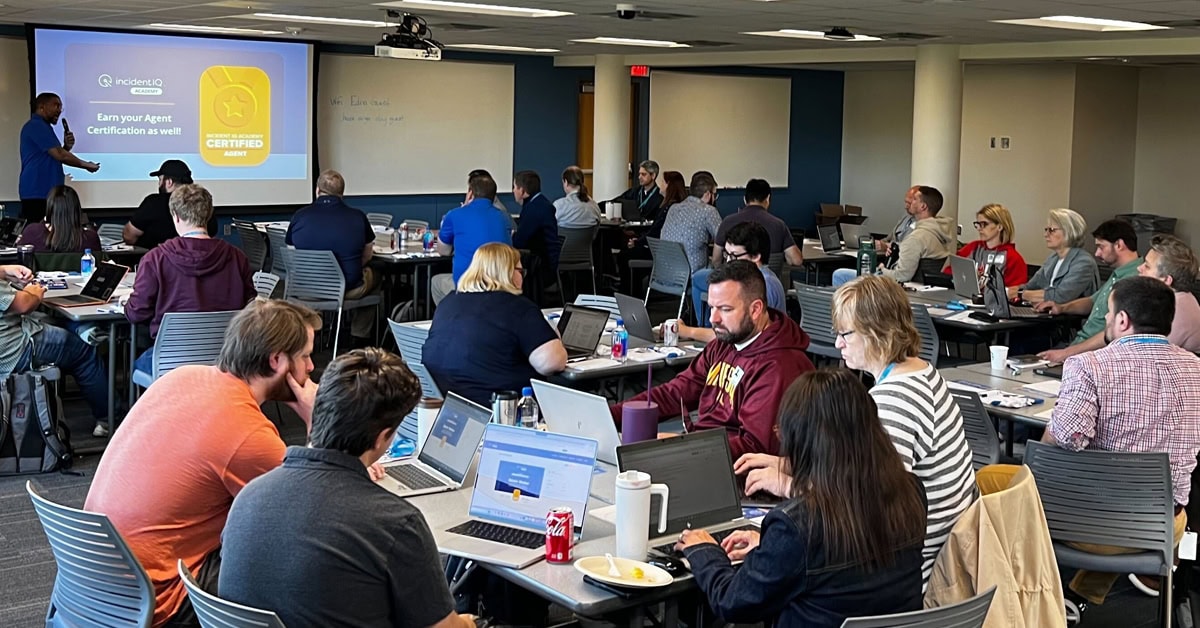
For onboarding, the team replaced multi-hour training sessions with a streamlined approach: a 30-minute session explaining the “why” of AISD Help (the district’s branded platform), followed by self-directed learning with Incident IQ’s built-in knowledge base. This scalable model enabled the district to onboard more than 365 agents efficiently.
IMPLEMENTATION
Year One of Impact
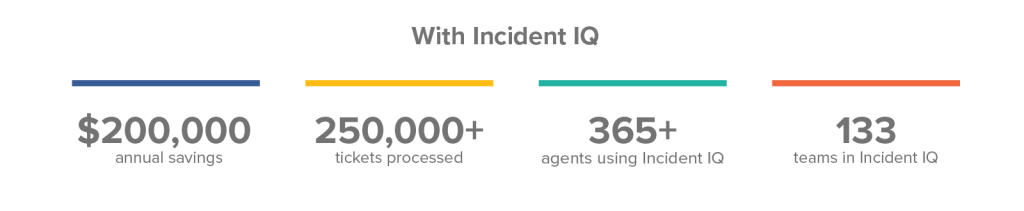
In its first year of using Incident IQ, Austin ISD has processed more than 250,000 tickets across 133 teams. The consolidation of systems delivered benefits that went far beyond volume.
To start, the district has achieved more than $200,000 in savings by consolidating multiple contracts into Incident IQ’s unified platform. These savings have come at a critical time, as 2025–2026 budget constraints ended the district’s practice of increasing technician capacity during the school year’s first weeks. Despite the smaller team, accurate asset data and faster routing through Incident IQ has led to improved performance. “We actually had better metrics this year with less staff than last year,” Browder noted. “There’s no way we could have done that on our previous platform.”
Beyond savings, teachers, parents, and staff now have one destination for support—AISD Help, powered by Incident IQ—regardless of whether they need assistance with technology, HR, or communication. Browder recalled the previous maze of systems: “If you have a question about this, go here. This question goes over here. This one requires email. This one needs a phone call.” That friction and frustration are now replaced with a consolidated system that gets requestors questions to their answers quickly and efficiently.
The consolidated system also delivers a single sign-on integration that verifies user identity automatically through the district’s student information system. “As soon as I click and see who they are, I can see what campuses they’re tied to and their students as well,” Browder said. This eliminates back-and-forth exchanges to confirm details, saving time and improving accuracy.
The shift to a unified platform has changed how Austin ISD operates, moving from manual report exports to having real-time, actionable data. Leaders can now identify trends, respond to emerging issues, and make staffing and training decisions based on current data rather than delayed snapshots: “We were very reactive before. Now we can be more proactive.”
THE OUTCOME
Delivering “Simple, Standard, Secure”
The numbers only tell a part of the story about Austin ISD’s journey with Incident IQ: 133 teams, 365 agents, 250,000+ tickets, $200,000 saved. Browder views success beyond the numbers.
“The goal of Incident IQ isn’t [just] to answer tickets. It’s to provide a high-quality service experience for everyone in your community.”
That’s how Austin ISD delivers on its “Simple, Standard, Secure” promise. It’s more than a guiding principle for the technology team; it’s a daily reality for 72,000 students and 10,000 employees.
For districts still juggling disconnected systems and unintentional silos, Austin ISD’s journey offers a roadmap: consolidation is achievable, security can be straightforward, and the right guiding framework can improve service while reducing costs.
To learn more about how Incident IQ can help your school district thrive, schedule your free demo today.