



























































A trouble ticket system is a manual or digitized tool for connecting students, teachers, parents and staff with someone who can help them resolve a problem. Most commonly, K-12 districts utilize help desk ticketing software that streamlines the issue reporting and solutions processes, creates faster response times, and enhances the user experience.
Integrated trouble ticket systems designed and built specifically for educational settings deliver actionable solutions for K-12 IT teams—including automated inquiry responses that acknowledge the request for service with an appropriate FAQ tailored to the problem.
What Does a Trouble Ticket System Do?
In the K-12 space, a trouble ticket system allows students, parents, educators, and administrators a way to submit an issue for tech support assistance. The system itself can function in any number of ways, offering dozens of possible features and functions.
Here are just a few ways that trouble ticket software solutions help stakeholders resolve their issues:
- Creates one point of entry for all tickets, preventing tickets from getting lost in seldom-checked inboxes
- Standardizes the information received for each ticket, guaranteeing essential fields get filled in prior to submission
- Streamlines ticket routing via predetermined rules
- Tracks asset service requests and asset health/longevity based on the services required
- Notifies help desk agents when tickets are idle – either unassigned or unattended for a certain amount of time – via text or email alerts
- Converts email help requests into active help desk tickets
- Automatically notifies support managers when escalations occur for more in-depth review
Clearly, trouble ticket systems optimize workflows. However, these systems also add value beyond just making the organization leaner and stronger.
In fact, digitally-based help desk systems provide cost containment benefits as more and more schools convert paper- and book-based systems to technology-driven ones, giving teachers access to hundreds of downloadable resources and teaching aids.
How Trouble Ticket Systems Work
Most trouble ticket systems include a self-service portal that allows users to access operating FAQs and troubleshooting tips so they can attempt to solve their issues on their own. If self-service options do not solve their problem, the user can create and submit a help desk ticket. Built-in automation capabilities then route the request to the appropriate support team for further assistance.
Assume Rodney, a ninth-grade student, cannot get an assignment uploaded. He’s tried troubleshooting options, but they just don’t seem to work. In this case, Rodney can create a trouble ticket detailing the problem, what he has already tried, and any other pertinent information. Some systems allow the user to select their preferred method of contact – email, text or other portal messaging channels.
When Rodney hits the send button, the trouble ticket system uses intuitive functionality to route the ticket to the proper department for resolution. Once the system assigns the ticket, the tech support team receives a text or email. A technician explores solutions, then sends a reply to Rodney. For more involved solutions, the support tech may initiate a web-based chat or phone call to resolve issues efficiently. Once everything is working properly and Rodney has confirmed he’s all set, the ticket is closed.
A more traditional help desk ticket system typically relies on manually routing service requests, often resulting in long response times and sometimes being transferred from agent to agent before you reach someone who has the skills and knowledge to resolve an issue.
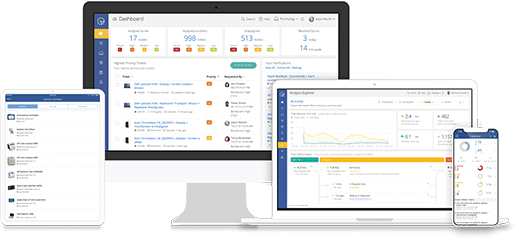
Incident IQ’s innovative toolkit streamlines support processes so stakeholders get resolutions faster—with less frustration.
Why Do K-12 Organizations Use Trouble Ticket Systems?
Organizations utilize integrated trouble ticket systems to simplify service requests. Leadership can view all tickets and assets through a single system, while educators, students, and staff reap the benefits of being automatically connected to the right support team or service management personnel.
An ideal system that receives and resolves customer issues effectively includes features to ensure all trouble tickets are tracked, empowering leadership with real-time information about resolution time and other metrics. This information informs decisions about project management, user experiences, and support team productivity.
Trouble ticket systems provide a clean, user-friendly workflow by automating repetitive tasks that are prone to human error, like misplacing a maintenance work order or missing an email.
Organizations use trouble ticket systems to streamline operations, support team members, update end users with ticket status alerts, and enhance customer satisfaction levels from the top down.
Benefits of Using a Trouble Ticket System
Supporting 1:1 programs is critical for today’s K-12 districts. Here are a few additional benefits that using a trouble ticket system delivers.
Collecting User & Device Information
When users submit a trouble ticket, they provide information about their device, the ways in which they use it, and/or incidents that may have occurred and now need repairing. In addition to the obvious benefit of automating ticket routing and service prioritization, the data can also be pulled out separately into itemized or holistic reports. Itemized reports would detail the projected lifespan for each individual device, while holistic views would show general trends in device usage and health. This information can then be used to influence technology training plans, or inform purchases of additional anti-malware software or top-rated Chromebook cases, etc.
Encouraging Service Portal Feedback
Gathering user feedback provides actionable insights that can inform upcoming project decisions and infrastructure design, among other things. Feedback allows organizational leadership to learn what they are doing right and areas that need improvement.
Automating Repetitive Tasks
Automating repetitive tasks—such as populating trouble tickets with relevant information via text or email service request—saves keystrokes and clicks that slow down the review and resolution processes.
At a minimum, automation in the K-12 environment can help your team save time on:
- Service request authorizations
- Prioritizing digitized service requests across all channels, from the self-service portal to live chats
- Increasing communication with automated notifications to stakeholders confirming the ticket has been received, or to support teams letting them know that a new task has been assigned to them
All of these automated tasks save time for your support team, allowing them to spend more time helping students, parents, teachers, and admins personally, and increasing the overall rate of on-time ticket closures
Enhancing School Processes
Trouble ticket systems provide leadership with data on bottlenecks, frequently requested issues, and other hold-ups that prevent your school from running smoothly. For instance, high numbers of software login issues indicate a need for better login processes, or the need to remove the login requirement. On the other hand, excessive resolution time complaints may indicate you need to further streamline workflows and service delivery practices.
Providing Overall Better Customer Support
With a strong ticket management system in place, tickets can be resolved faster without getting lost or forgotten for a period of time. Common issues can be identified and added to the knowledge base or self-service portal, and more difficult issues can be automatically routed to the best-fit tech support team members for quick resolution. The faster students, teachers, parents, and admins can get back up to speed, the better for everyone.
Types of K-12 Trouble Tickets
Streamlining workflows for the K-12 environment includes routing service requests to the proper department or agent. Tracking and data collection processes may vary depending on the root cause of the user’s problem. An intuitive trouble ticket tracking system organizes service requests into different types, empowering asset and facility managers to allocate technology and human resources wisely.
Each department may have a unique workflow, and intuitive trouble ticket systems help organizations manage those workflows efficiently.
Information Technology (IT) Trouble Tickets
Information technology agents typically help people with wi-fi, portal sign-on issues, technical problems with uploading or downloading content, and software or hardware problems.
Tracking IT help desk tickets provides valuable insights about the most common type of IT service request and which agents are solving those issues. IT trouble tickets, unlike most maintenance work order tickets, require extensive knowledge about the devices and systems used throughout an organization. Common issues reported include help signing on, resetting passwords, downloading documents, connectivity issues, and other hardware or software problems.
Facilities-Related Tickets
Facilities trouble tickets are usually prioritized according to urgency. This ticket type includes repair and maintenance service requests, such as an overflowing toilet, lighting, a broken window, or key replacement.
Streamlining workflow management may involve routing all tickets to an Operations Manager for authorization before a technician is assigned. This unique routing reduces the burden on IT support teams, allowing them to spend more time focused on ITSM issues and other core activities.
The iiQ Facility Safety Checklist provides possible reasons why support staff or management leaders may need to contact the service desk, such as:
- Cleanliness issues, such as spills or other obstacles in the hallway
- Fire extinguishers or other safety equipment are expired or need replenishing
- Cafeteria equipment that needs servicing
- First aid stations are missing or not fully supplied
Asset Management Trouble Tickets
Trouble tickets are an integral part of asset management. There are times when an administrator or facilities manager may need to create a support ticket. For example, school districts typically assign digital devices and other assets to a specific school or person. When an educator is assigned to another location temporarily, they may need to create a trouble ticket to reallocate the asset with appropriate access and filters for the new location.
Asset management includes digital devices—such as Chromebooks and laptops—as well as shared equipment including:
- Copiers
- Fax machines
- Vehicles
- Landscaping equipment
- Other tools and equipment subject to proactive life-cycle management
What to Look For in a Trouble Ticket System
Many schools require trouble ticketing systems with similar functionality and capabilities. Every school district and its stakeholders within deserve a system that is user-friendly and designed with their requirements in mind.
Look for:
- Automation features: Deploy ticketing workflows specifically for each location, department, or role.
- Team collaboration: Facilitates research and development while expanding learning opportunities.
- Searchable ticket history: Informs equipment life-cycle decisions and provides insights into short-term and long-term team performance.
- Support team notifications: Alert ticket management leaders and frontline technicians when a new ticket arrives (as well as when a ticket is idle, but not resolved).
- Customer feedback: Allows your organization to gather feedback from directly within the portal/
- Automatic ticket population: Provides a view of past problems (by device) and customer engagement (by user).
- Customer-centric communication channels: Improves the customer experience.
- KPI tracking: Provides key metrics and generates reports, allowing leadership to monitor compliance and team collaboration efforts.
Incident IQ’s Unified Solution for Help Ticketing, Asset Management, and Facilities Maintenance
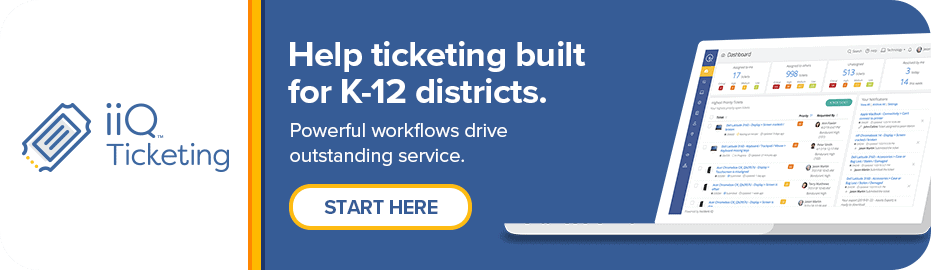
Incident IQ was built specifically for the K-12 space. Our ticketing system features include:
- Help desk automation software that takes ticketing to the next level. The system allows your school or district to route service requests based on device, location, asset, issue, and other metrics, instantly prioritizing tickets based on urgency or other predefined criteria. The ability to assign service-level agreements based on ticket type optimizes customer service and enhances customer relationship-building efforts.
- A robust analytics and reporting functionality that delivers unparalleled insights into your organization’s performance and productivity.
- A cloud-based, proprietary API that can handle millions of users, facilitating internal and external collaboration across the street or in any US geographic location with access to the internet. While we are proud of our integrations, we also offer customizable solutions that empower our customers to create extensions to further expand capabilities based on end-user needs and requirements.
- Our Support Flow feature provides workflow solutions designed around popular learning applications, including Nessy, MobyMax, ClassFlow, and almost 4 dozen other apps. Plus, you get helpful recommended ticket solutions and access to our expansive knowledge-based solutions that allow your organization to easily customize issue types based on your own trouble ticket management goals.
Interested in learning more? Request a demo to see how Incident IQ helps manage maintenance work orders, help requests, and more.